By Mukul Dutt, Paper & Beyond (family printing business in Delhi-NCR since 1985). Last updated October 2026.
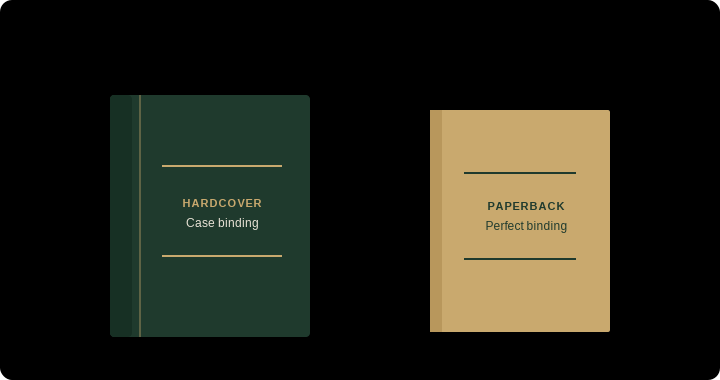
Most first-time authors pick hardcover because it "feels like a real book." Then they see the quote.
Hardcover vs paperback comes down to three things: cost, lifespan and who the book is for. A paperback is glued into a flexible card cover and costs far less per copy. A hardcover is sewn or glued into a rigid board case, lasts longer and opens flatter, but on Amazon KDP's own price sheet it costs about $4.65 more to print per copy before page count is even counted.
That gap decides most of it. The rest of this guide shows you where it doesn't.
What is the difference between hardcover and paperback?
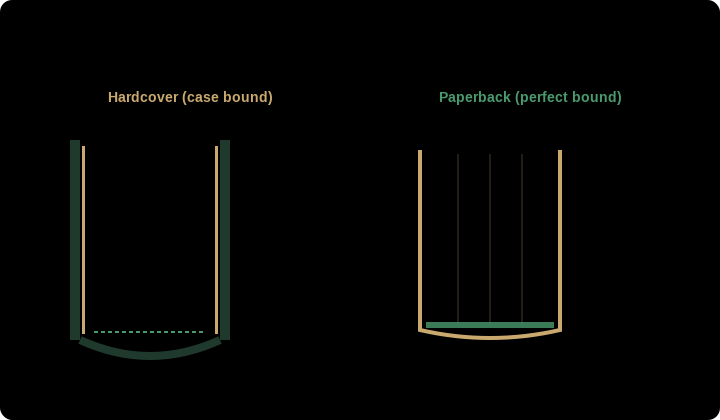
A hardcover (also called hardback or case-bound) has its pages attached to a rigid cover made of 2 to 3 mm greyboard wrapped in paper, cloth or leatherette, joined by endpapers. A paperback (softcover) has its pages glued straight into a single flexible card cover, usually 250 to 300 GSM. The inside pages can be identical. The binding and cover are what change the price, weight and lifespan.
Pick both up and you'll feel it straight away.
A hardcover has three extra parts a paperback doesn't: two boards, endpapers that glue the book block to those boards, and a spine with a hinge (the groove near the spine that lets the cover swing open).
A paperback is simpler. The book block is roughened at the spine, glue goes on, and the cover wraps around it.
Then there's the dust jacket, the loose printed wrapper on a lot of hardcovers. It's optional. Plenty of hardcovers print the design straight onto the case instead, which we call a printed case or "PPC" (printed paper case).
| Feature | Paperback | Hardcover |
|---|---|---|
| Cover | Single 250-300 GSM card, often laminated | 2-3 mm greyboard wrapped in paper, cloth or leatherette |
| Binding | Perfect (glued) or PUR glue | Section-sewn or glued, then cased in |
| Opens flat? | No, springs shut | Mostly, especially when sewn |
| Weight (300 pages) | Light | Noticeably heavier |
| Typical use | Novels, textbooks, guides, bulk runs | Gift editions, coffee-table books, theses, reference |
| Print cost per copy | Lower | Higher (fixed extra per copy) |
| Production time | Faster | Slower (extra casing steps) |
How is a hardcover bound compared to a paperback?
Paperbacks use perfect binding: pages are stacked, the spine edge is milled, and hot-melt or PUR glue holds everything inside a wraparound cover. Hardcovers use case binding: pages are usually folded into signatures, sewn together, glued, and then fixed into a separately built board case with endpapers. Case binding has more steps, more material and more hand work, which is where its extra cost and durability both come from.
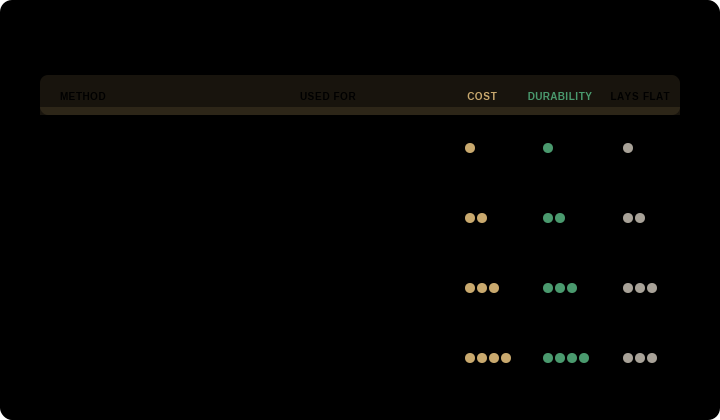
Walk into a print shop and you'll hear four binding styles mentioned.
Perfect binding with regular hot-melt glue. Cheapest and fastest. Fine for most paperbacks.
PUR binding. Same process, stronger polyurethane glue. Pages don't fall out as easily, and the book opens a little wider. If you're doing a paperback textbook that students will abuse, ask for PUR.
Section sewing. Pages are folded into groups of 16 or 32 (signatures) and stitched with thread before gluing. You can do this for a paperback too, but it's most common under a hardcover.
Case binding. The sewn or glued block goes into a rigid board case. This is what most people mean by "hardcover."
A catch people miss: a hardcover isn't automatically sewn. Cheaper hardcovers glue the block and then case it. If durability is the whole reason you're paying more, ask your printer whether the block is sewn.
Why are hardcover books more expensive to print?
Hardcovers cost more because every copy needs boards, a cover wrap, endpapers and an extra casing step on top of the book block. Amazon KDP's published printing costs show it clearly: a 300-page black-ink paperback costs $4.60 to print, while the same 300-page hardcover costs $9.25. The page cost is identical at $0.012 per page. The difference is a fixed charge per copy for the case itself.
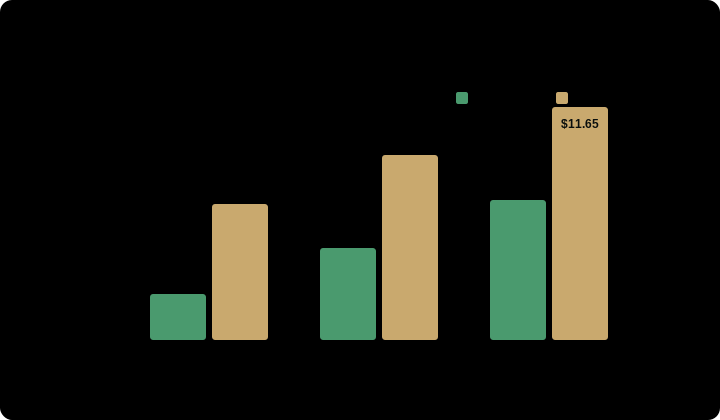
The math comes straight from KDP's paperback printing cost page and its hardcover cost page.
Paperback (110 to 828 pages, black ink): $1.00 fixed + $0.012 per page.
Hardcover (110 to 550 pages, black ink): $5.65 fixed + $0.012 per page.
So:
- 100 pages: paperback $2.30, hardcover $6.80
- 300 pages: paperback $4.60, hardcover $9.25
- 500 pages: paperback $7.00, hardcover $11.65
Notice something? The gap barely moves with page count. You pay roughly the same "hardcover tax" on a thin book and a thick one.
So hardcover makes more sense for fat, premium books than for a 120-page poetry collection.
These are print-on-demand prices, one copy at a time. Offset print runs work differently. Once you're printing 500 or more copies, the per-copy cost of both formats drops, and the hardcover premium shrinks as a share of the total because board and casing costs get spread across the run.
The only honest way to know your number is to get a quote for your exact page count, trim size and quantity.
Does a hardcover last longer than a paperback?
Yes. A well-made hardcover, especially a section-sewn one, survives far more handling than a glued paperback. The rigid boards protect the corners and pages, and sewn signatures don't crack or shed pages the way a glued spine can. That's why libraries rebind paperbacks into hard covers, following the ANSI/NISO Z39.78 library binding standard, before putting heavily used books into circulation.
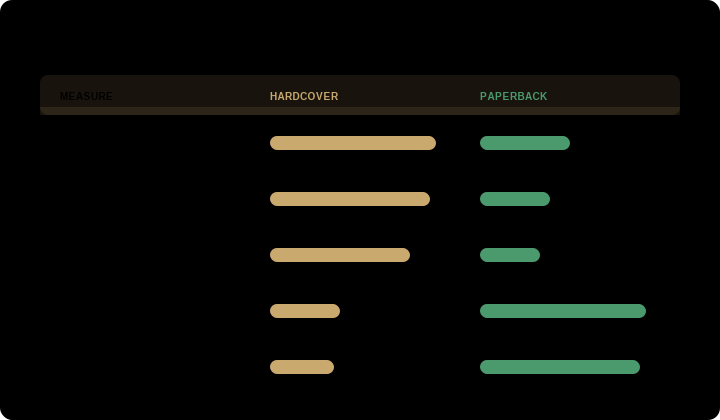
The UC Berkeley Library Bindery puts it bluntly. Books bound to the library binding standard "have far longer shelf lives than publishers' or edition bindings." The same page lists the usual failures of mass-produced binding: split bindings, warped covers and de-lamination.
In practice, it depends on how hard the book gets used.
A paperback that gets read once and shelved will last decades. For most novels, durability barely matters.
A school library book that 40 kids borrow in a year is another matter. The glued spine cracks, pages work loose, corners curl.
Hardcovers also open flatter, especially when sewn. Useful for cookbooks, manuals, music books and anything someone reads with their hands busy.
The trade-off is weight. A 400-page hardcover is heavier to carry and costs more to courier, which adds up if you're shipping across India.
Is hardcover or paperback better for a self-published book in India?
For most self-published authors in India, paperback is the better first format. It's cheaper per copy, easier to price competitively and cheaper to courier. Hardcover makes sense when the book is a gift item, a premium edition, a photo or coffee-table book, or something you hand to clients rather than sell. One more Indian catch: Amazon KDP does not currently support paperback or hardcover distribution on Amazon.in, so you'll need a local printer.
That last point catches a lot of people out.
KDP's own help page says amazon.in doesn't support its paperback and hardcover distribution. So if your readers are in India, KDP print-on-demand isn't your route. You'll print locally through an Indian printer or a local print-on-demand service.
My rule of thumb, when someone asks which to print:
Start with paperback if your book is a novel, a guide, a textbook or anything you'll sell on price.
Go hardcover if the book is a gift, a family history, a coffee-table photo book, a memorial edition or a corporate book you're handing to clients. A book meant to sit on someone's desk for years should feel like it.
Do both if you have the budget. A small hardcover run of 100 to 200 copies for launch events and gifting, plus a larger paperback run for sales, is a common split.
The market backs paperback-first too. India's book market was worth about USD 5.13 billion in 2025, according to IMARC Group, with print ("hard copy") still holding 72.6% of the format share and educational books taking 34.8%. A big chunk of that is textbooks and guides. Those are almost always paperback.
Which sells more, hardcover or paperback?
Paperbacks sell more units overall because they're cheaper, but hardcovers earn more per copy and have held up better recently. In the US, Circana BookScan data reported by Sherwood News showed mass-market paperback unit sales falling 19% year over year, while hardcovers and larger trade paperbacks posted modest increases. Publishers are leaning toward the higher-margin hardcover first, then the paperback later.
The same report cites Bowker data showing new US adult nonfiction paperback titles down 42% over five years to 2024, against a 9% drop for hardcover titles.
That's the US, not India. Still, it shows how publishers think.
Big publishers often launch in hardcover, wait the better part of a year, then release a cheaper paperback. The hardcover captures readers who want it now and will pay more. The paperback catches everyone else.
As an independent author, you probably don't need that playbook. But if you're printing a premium book for a known audience, launching in hardcover is a legitimate move.
What page counts and sizes work for hardcover vs paperback?
Paperbacks handle a much wider page range than hardcovers. Amazon KDP, for example, accepts black-ink paperbacks from 24 to 828 pages but hardcovers only from 75 to 550 pages. Very thin books don't have enough spine to case properly, and very thick ones get heavy and strain the hinge. For both formats, standard trim sizes like 5.5 x 8.5 inches, 6 x 9 inches and A5 waste the least paper and cost the least.
Page count changes the decision more than people expect.
Under about 75 pages, a hardcover struggles. The spine is too narrow for lettering and the boards feel out of proportion to the thin page block. Saddle stitching or a paperback is the better fit.
Between roughly 150 and 500 pages, both formats work well. This is where the choice really is about budget and audience.
Past 550 pages or so, paperbacks get floppy and hardcovers get heavy. Consider a slightly larger trim size, thinner paper or splitting into two volumes.
Stick to standard sizes where you can. Custom sizes waste paper on the press sheet, and that waste shows up in your quote.
What is hard binding for a thesis or project report?
Hard binding for a thesis, dissertation or project report means fixing the printed pages into a rigid board cover, usually black, maroon or navy rexine, with the title, name and university gold-embossed on the front and spine. Universities ask for several hard-bound copies of PhD and master's submissions, and your department sets the exact number. It's a small-quantity job, very different from a book print run, and a local binder can usually turn it around within a couple of days.
Most "hardcover vs paperback" articles skip this part. In India, a lot of people searching "hard binding" aren't authors at all.
They're students.
If that's you, check a few things before you hand over your pages.
Your university's format rules. Cover colour, spine text and number of copies are usually specified. Get them from your department, not from the shop.
Margins. Hard binding eats into the inner margin. Many university guidelines ask for about 1.5 inches (38 mm) on the binding side, so text doesn't disappear into the spine.
Spelling on the cover. Gold lettering is stamped. You can't fix a typo afterwards without redoing the cover.
Spiral or soft binding is fine for drafts. Submission copies almost always need hard binding.
How do you choose between hardcover and paperback?
Choose paperback when price per copy, shipping weight and quick turnaround matter most, which covers most novels, textbooks and guides. Choose hardcover when the book needs to survive heavy handling, open flat, look premium on a shelf or be given as a gift. If you're unsure, quote both: the difference for your exact page count and quantity usually makes the decision for you.
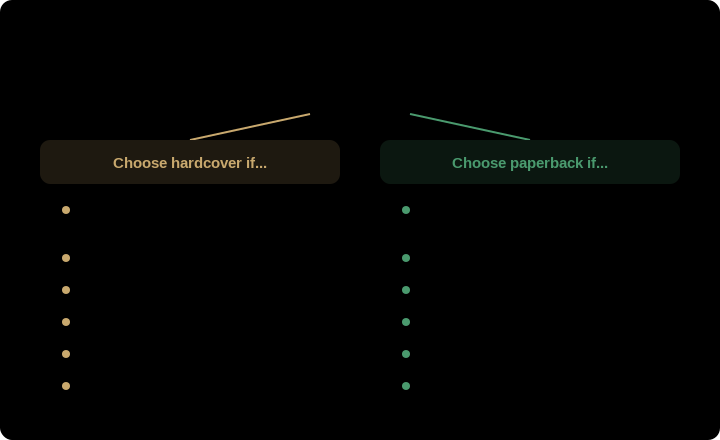
Run through these questions.
Will people use this book heavily? Library, school, reference, cookbook? Hardcover.
Is the book a gift, keepsake or client giveaway? Hardcover.
Are you selling on price, especially online? Paperback.
Is it under about 150 pages? Paperback, unless it's a photo book. A thin hardcover looks odd and the fixed casing cost hurts more.
Will you ship most copies by courier? Paperback is lighter and cheaper to send.
Do you need it fast? Paperback. Casing adds production time.
Still torn? Get both formats quoted at the same quantity. Once the two numbers sit side by side, the choice tends to get obvious.
Frequently asked questions
Should I print my book in hardcover or paperback?
Print in paperback if you're selling mainly on price, shipping by courier or printing a novel, textbook or guide. Print in hardcover if the book is a gift, a premium edition, a photo book or a reference that will be handled a lot. Many authors do a small hardcover run for launches and gifting alongside a larger paperback run for everyday sales.
How much more does a hardcover cost to print than a paperback?
On Amazon KDP's published print-on-demand pricing, a hardcover costs $4.65 more per copy than a paperback at the same page count: $5.65 fixed versus $1.00 fixed, with both at $0.012 per page. A 300-page black-ink book costs $4.60 as a paperback and $9.25 as a hardcover. Offset runs of 500+ copies narrow the gap, so get a local quote.
Which lasts longer, a hardcover or a paperback?
A hardcover lasts longer, especially when the pages are section-sewn. Rigid boards protect the pages and corners, and sewn signatures don't shed pages like a glued paperback spine can. UC Berkeley's library bindery notes that books bound to the library binding standard have far longer shelf lives than ordinary publisher bindings, which is why libraries rebind heavily used paperbacks.
Can I print a hardcover book with Amazon KDP in India?
You can create a KDP hardcover, but KDP doesn't currently support paperback or hardcover distribution on Amazon.in, according to its own help pages. KDP hardcovers also have a 75 to 550 page limit. For Indian readers, the practical route is printing through a local printer or Indian print-on-demand service and selling through your own channels.
What is the difference between case binding and perfect binding?
Perfect binding glues the stacked pages directly into a flexible card cover. That's how most paperbacks are made. Case binding attaches the page block, often sewn, to a separate rigid cover built from greyboard and covering material, joined with endpapers. That's a hardcover. Case binding costs more and takes longer but is far more durable and opens flatter.
How long does thesis hard binding take?
Thesis hard binding usually takes a day or two for a handful of copies, since it's a small, mostly manual job. Allow extra time if you need gold embossing on the spine, a special cover colour or more than a few copies. Check your university's cover colour, spine text and margin rules before you go, because stamped lettering can't be corrected afterwards.
Get both formats quoted before you decide
Don't pick a format on feel. Send your printer the page count, trim size, paper and quantity, and ask for a paperback and a hardcover price side by side. If you're printing in India, request a free quote from Paper & Beyond with both options, and you'll have real numbers within 24 hours.
About the author: Mukul Dutt runs Paper & Beyond, a second-generation printing business in Delhi-NCR that has printed books, journals and school material since 1985. He handles specs and pricing for clients directly.